Understanding Open Source Licenses: MIT, Apache, GPL Explained
In the ever-evolving landscape of software development, open source has become a cornerstone. Yet, as more companies and developers embrace open source, understanding the nuances of open source licenses becomes crucial. The MIT, Apache, and GPL licenses are among the most prevalent, each with unique implications for how software can be used, modified, and distributed. This post aims to demystify these licenses, providing insights into their real-world applications and impact on system design.
Why This Topic Matters Now
As we move into 2025–2026, the software industry is witnessing an unprecedented shift towards open source. With the rise of cloud-native architectures, microservices, and AI-driven solutions, leveraging open source components is not just beneficial—it's often essential. However, the choice of license can significantly affect a project's trajectory, influencing everything from collaboration to commercialization. Understanding these licenses is no longer optional; it's a necessity for any engineer involved in building production systems.
Deep Dive into Open Source Licenses
MIT License
The MIT License is one of the simplest and most permissive open source licenses. It allows users to do almost anything with the software, including making and distributing closed-source versions.
Key Features:
- Permissive: Allows for modification and redistribution, even in proprietary software.
- Minimal Restrictions: Only requires attribution to the original authors.
Example Use Case:
Consider a Java-based microservice using a library licensed under MIT. You can modify the library to fit your needs and even integrate it into a proprietary system without open-sourcing your modifications.
Apache License 2.0
The Apache License is also permissive but includes additional protections, particularly around patents.
Key Features:
- Patent Grant: Provides an express grant of patent rights from contributors to users.
- Explicit Contribution Terms: Ensures that contributions are clearly licensed.
Example Use Case:
A Spring Boot application using an Apache-licensed library can be modified and redistributed. The patent grant ensures that users are protected from patent claims by contributors, which is crucial for companies concerned about intellectual property.
GPL (General Public License)
The GPL is a copyleft license, meaning that any derivative work must also be open-sourced under the same license.
Key Features:
- Copyleft: Requires derivative works to be open-sourced.
- Strong Reciprocity: Ensures that improvements are shared with the community.
Example Use Case:
If you incorporate a GPL-licensed library into your system, you must open-source your entire application under the GPL. This is often seen in community-driven projects where collaboration and transparency are prioritized.
Real-World Use Cases and Architecture Patterns
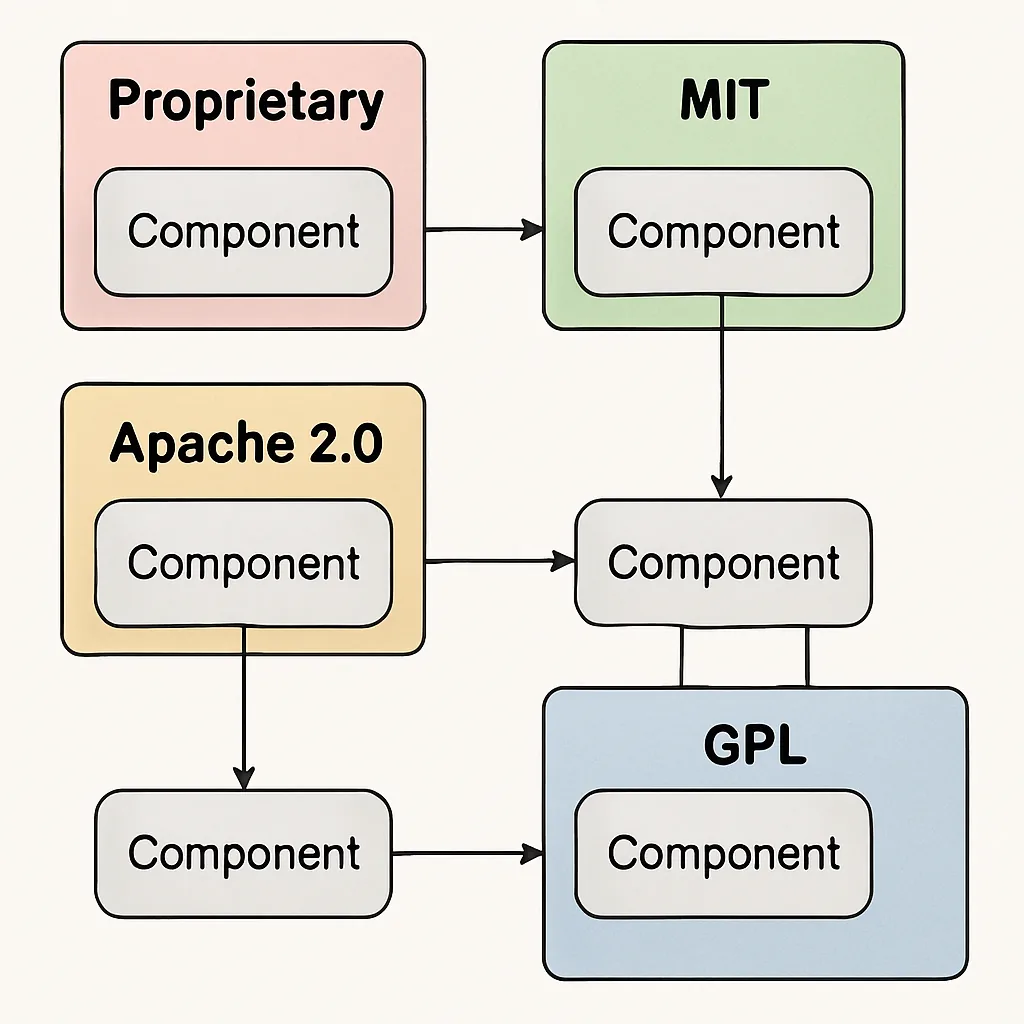
In a microservices architecture, choosing the right license can impact how services interact and are deployed. For instance, using GPL-licensed components in a service might necessitate open-sourcing the entire service, which could be a strategic decision for fostering community engagement.
In this diagram, Microservice C's GPL license requires that its source code be made available, potentially influencing the licensing strategy for the entire system.
Pros, Cons, and Challenges
MIT License
- Pros: Flexibility, ease of use, minimal legal overhead.
- Cons: Lack of patent protection, potential for proprietary forks.
Apache License
- Pros: Patent protection, clear contribution terms.
- Cons: More complex than MIT, potential for legal intricacies.
GPL License
- Pros: Ensures community contributions, promotes transparency.
- Cons: Restrictive for commercial use, potential for license incompatibility.
Best Practices / Recommendations
- Assess Project Goals: Align your license choice with your project's goals—whether it's community engagement, commercial use, or patent protection.
- Understand Dependencies: Be aware of the licenses of all dependencies to avoid conflicts.
- Consult Legal Experts: Especially for GPL, ensure compliance with legal requirements.
Common Mistakes Engineers Make
- Ignoring License Terms: Overlooking the implications of a license can lead to legal issues.
- Mixing Incompatible Licenses: Combining components with conflicting licenses can complicate distribution.
When NOT to Use This Approach
Avoid using GPL-licensed components if your project is intended to remain proprietary. Similarly, if patent protection is a concern, the MIT license might not be suitable.
How This Impacts System Design Interviews
Understanding open source licenses can be a differentiator in system design interviews. It demonstrates a holistic understanding of software development, beyond just technical skills.
Future Outlook
As open source continues to dominate, we may see new licenses emerge, addressing current gaps and challenges. The trend towards more collaborative and transparent development practices will likely influence future licensing models.
Conclusion
Choosing the right open source license is a strategic decision that can influence a project's success. By understanding the nuances of the MIT, Apache, and GPL licenses, engineers can make informed decisions that align with their project's goals and legal requirements. As we advance, staying informed about licensing trends will be crucial for navigating the open source ecosystem effectively.
Understanding open source licenses is not just about compliance; it's about leveraging the power of community-driven development while safeguarding your project's interests.