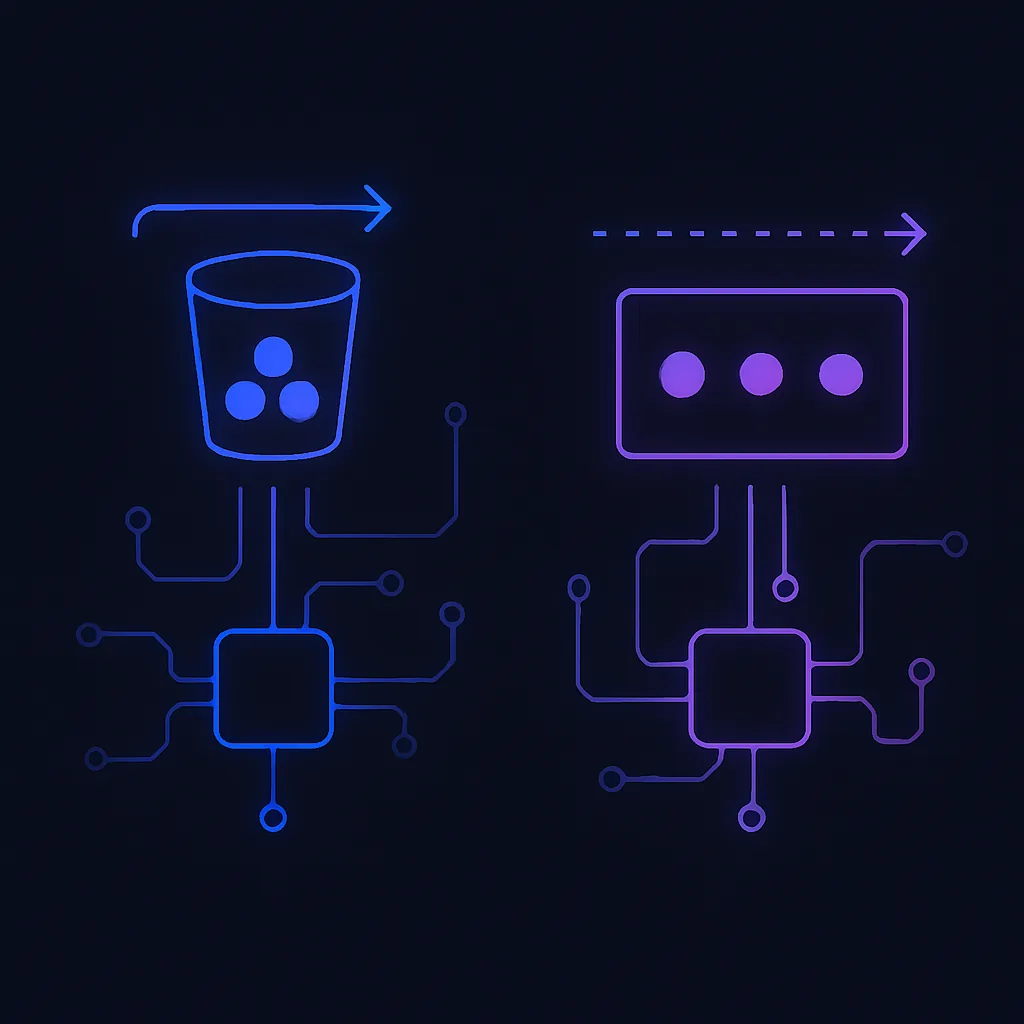
Rate Limiting at Scale: Token Bucket vs Sliding Window
In the ever-evolving landscape of distributed systems, ensuring that your services can handle traffic efficiently and fairly is paramount. Rate limiting is a critical component in this equation, acting as a gatekeeper to protect your systems from abuse and ensure quality of service. Today, we'll delve into two popular rate limiting algorithms: Token Bucket and Sliding Window, exploring their nuances, real-world applications, and how they fit into modern system design.
Why Rate Limiting Matters Now
As we step into 2025 and beyond, the demand for scalable, resilient, and efficient systems has never been higher. With the proliferation of microservices, serverless architectures, and edge computing, the complexity of managing traffic has increased. Rate limiting is not just about preventing abuse; it's about ensuring that your services can scale gracefully under load, providing a consistent experience for users worldwide.
Deep Dive into Concepts
Token Bucket Algorithm
The Token Bucket algorithm is a simple yet powerful mechanism for rate limiting. It works by maintaining a bucket that holds tokens, which are added at a fixed rate. Each request consumes a token, and if the bucket is empty, the request is denied.
Example:
public class TokenBucket {
    private final long capacity;
    private final long refillTokens;
    private final long refillInterval;
    private long tokens;
    private long lastRefillTimestamp;

    public TokenBucket(long capacity, long refillTokens, long refillInterval) {
        this.capacity = capacity;
        this.refillTokens = refillTokens;
        this.refillInterval = refillInterval;
        this.tokens = capacity;
        this.lastRefillTimestamp = System.nanoTime();
    }

    public synchronized boolean allowRequest() {
        refill();
        if (tokens > 0) {
            tokens--;
            return true;
        }
        return false;
    }

    private void refill() {
        long now = System.nanoTime();
        long tokensToAdd = ((now - lastRefillTimestamp) / refillInterval) * refillTokens;
        tokens = Math.min(capacity, tokens + tokensToAdd);
        lastRefillTimestamp = now;
    }
}
Sliding Window Algorithm
The Sliding Window algorithm offers a more granular approach by maintaining a log of request timestamps and allowing requests based on the number of requests in the current window.
Example:
public class SlidingWindow {
    private final int maxRequests;
    private final long windowSize;
    private final Deque<Long> requestTimestamps;

    public SlidingWindow(int maxRequests, long windowSize) {
        this.maxRequests = maxRequests;
        this.windowSize = windowSize;
        this.requestTimestamps = new LinkedList<>();
    }

    public synchronized boolean allowRequest() {
        long now = System.currentTimeMillis();
        while (!requestTimestamps.isEmpty() && requestTimestamps.peek() <= now - windowSize) {
            requestTimestamps.poll();
        }
        if (requestTimestamps.size() < maxRequests) {
            requestTimestamps.add(now);
            return true;
        }
        return false;
    }
}
Real-World Use Cases and Architecture Patterns
Use Case: API Gateway
In a microservices architecture, an API Gateway often acts as the entry point for client requests. Implementing rate limiting at this level ensures that downstream services are protected from excessive load.
Use Case: Distributed Systems
In distributed systems, rate limiting can be implemented at various levels, including individual services, to ensure fair usage and prevent any single service from being overwhelmed.
Pros, Cons, and Challenges
Token Bucket
Pros:
- Simple to implement and understand.
- Provides burst handling capabilities.
Cons:
- Less precise control over request rates.
Sliding Window
Pros:
- Provides precise control over request rates.
- More flexible in handling varying traffic patterns.
Cons:
- More complex to implement and manage.
Common Mistakes Engineers Make
- Ignoring Time Synchronization: In distributed systems, time synchronization is crucial for accurate rate limiting.
- Overlooking Edge Cases: Not accounting for network latency and clock drift can lead to unexpected behavior.
When NOT to Use This Approach
- Token Bucket: Avoid when precise control over request rates is required.
- Sliding Window: Avoid in systems where simplicity and low overhead are priorities.
Best Practices / Recommendations
- Combine Algorithms: Use a combination of Token Bucket and Sliding Window to balance simplicity and precision.
- Leverage Cloud Services: Utilize cloud-native solutions like AWS API Gateway or Azure API Management for built-in rate limiting.
- Monitor and Adjust: Continuously monitor traffic patterns and adjust rate limits as needed.
Future Outlook
As AI and machine learning continue to evolve, expect more intelligent rate limiting solutions that adapt dynamically to traffic patterns, providing even more efficient and fair resource allocation.
Conclusion
Rate limiting is a critical component of modern system design, ensuring that your services remain resilient and performant under load. By understanding the nuances of the Token Bucket and Sliding Window algorithms, you can make informed decisions about which approach best suits your needs. As we move forward, the ability to implement and manage rate limiting effectively will be a key differentiator in building scalable and reliable systems.
Key Takeaways
- Rate limiting is essential for protecting services and ensuring quality of service.
- Token Bucket and Sliding Window offer different trade-offs in terms of simplicity and precision.
- Real-world implementations often require a combination of approaches and continuous monitoring.
By mastering these concepts, you'll be well-equipped to design systems that can handle the demands of the future.