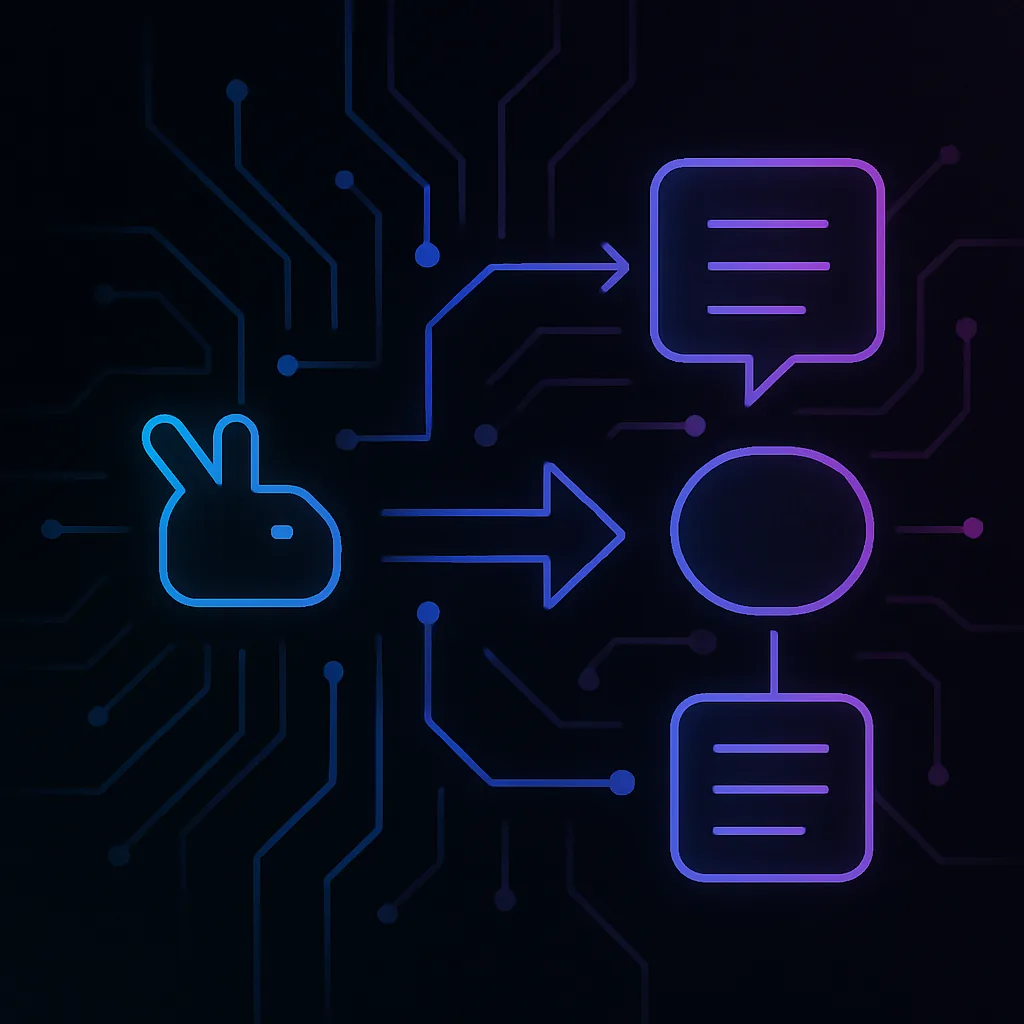
Navigating RabbitMQ Exchange Types: Direct, Topic, Fanout, and Headers
In the ever-evolving landscape of microservices, efficient communication between services is paramount. As systems scale, the need for robust messaging solutions becomes critical. RabbitMQ, a popular message broker, offers various exchange types—Direct, Topic, Fanout, and Headers—that cater to different messaging patterns. Understanding these exchange types is crucial for designing scalable and maintainable systems.
Why This Topic Matters Now
As we move into 2025 and beyond, the complexity of distributed systems continues to grow. With the rise of cloud-native applications and the increasing adoption of event-driven architectures, choosing the right messaging pattern can significantly impact system performance and reliability. RabbitMQ's exchange types provide the flexibility needed to address diverse communication needs, making it a vital tool in the modern engineer's toolkit.
Deep Dive into RabbitMQ Exchange Types
Direct Exchange
A Direct Exchange routes messages with a specific routing key to queues that are bound with the same key. This is akin to a point-to-point communication model.
Example:
// Spring Boot configuration for a Direct Exchange
@Bean
public DirectExchange directExchange() {
    return new DirectExchange("direct-exchange");
}

@Bean
public Queue directQueue() {
    return new Queue("direct-queue");
}

@Bean
public Binding directBinding(DirectExchange directExchange, Queue directQueue) {
    return BindingBuilder.bind(directQueue).to(directExchange).with("routing-key");
}
Use Case: Direct exchanges are ideal for scenarios where messages need to be routed to a specific service, such as processing orders in an e-commerce system.
Topic Exchange
A Topic Exchange routes messages to one or many queues based on wildcard matches between the routing key and the routing pattern specified in the queue binding.
Example:
// Spring Boot configuration for a Topic Exchange
@Bean
public TopicExchange topicExchange() {
    return new TopicExchange("topic-exchange");
}

@Bean
public Queue topicQueue() {
    return new Queue("topic-queue");
}

@Bean
public Binding topicBinding(TopicExchange topicExchange, Queue topicQueue) {
    return BindingBuilder.bind(topicQueue).to(topicExchange).with("*.important.*");
}
Use Case: Topic exchanges are perfect for complex routing scenarios, such as logging systems where messages are categorized by severity and source.
Fanout Exchange
A Fanout Exchange broadcasts messages to all queues bound to it, ignoring the routing key.
Example:
// Spring Boot configuration for a Fanout Exchange
@Bean
public FanoutExchange fanoutExchange() {
    return new FanoutExchange("fanout-exchange");
}

@Bean
public Queue fanoutQueue() {
    return new Queue("fanout-queue");
}

@Bean
public Binding fanoutBinding(FanoutExchange fanoutExchange, Queue fanoutQueue) {
    return BindingBuilder.bind(fanoutQueue).to(fanoutExchange);
}
Use Case: Fanout exchanges are suitable for scenarios like broadcasting notifications to multiple services, such as cache invalidation events.
Headers Exchange
A Headers Exchange uses message headers to route messages, allowing for more complex routing logic.
Example:
// Spring Boot configuration for a Headers Exchange
@Bean
public HeadersExchange headersExchange() {
    return new HeadersExchange("headers-exchange");
}

@Bean
public Queue headersQueue() {
    return new Queue("headers-queue");
}

@Bean
public Binding headersBinding(HeadersExchange headersExchange, Queue headersQueue) {
    return BindingBuilder.bind(headersQueue).to(headersExchange).where("header-key").matches("header-value");
}
Use Case: Headers exchanges are useful when routing decisions need to be made based on multiple attributes, such as user preferences or geographic location.
Real-World Use Cases and Architecture Patterns
In a microservices architecture, RabbitMQ can be used to decouple services, improve scalability, and enhance fault tolerance. For instance, a retail platform might use a combination of exchange types to handle order processing, inventory updates, and customer notifications efficiently.
Pros, Cons, and Challenges
Pros
- Flexibility: RabbitMQ's exchange types offer versatile routing options.
- Scalability: Supports horizontal scaling of consumers.
- Reliability: Ensures message delivery with acknowledgments and retries.
Cons
- Complexity: Requires careful design to avoid bottlenecks.
- Overhead: Managing multiple exchanges and queues can increase operational overhead.
Challenges
- Message Ordering: Ensuring message order can be complex with multiple consumers.
- Latency: Network latency can impact message delivery times.
Best Practices / Recommendations
- Design for Failure: Implement retry mechanisms and dead-letter queues.
- Monitor and Scale: Use monitoring tools to track message flow and scale consumers as needed.
- Optimize Routing: Choose the appropriate exchange type based on message patterns and system requirements.
Common Mistakes Engineers Make
- Overusing Fanout Exchanges: Broadcasting messages unnecessarily can lead to performance issues.
- Ignoring Message Size: Large messages can slow down the system; consider using references to data instead.
- Poorly Defined Routing Keys: Ambiguous routing keys can lead to incorrect message delivery.
When NOT to Use This Approach
- Simple Systems: For straightforward applications, a simpler messaging solution like Kafka might be more appropriate.
- High Throughput Needs: RabbitMQ may not be the best choice for extremely high throughput scenarios compared to other brokers like Kafka.
How This Impacts System Design Interviews
Understanding RabbitMQ exchange types can set you apart in system design interviews. Demonstrating knowledge of when and how to use different exchanges shows a deep understanding of messaging patterns and their impact on system architecture.
Future Outlook
As microservices architectures continue to evolve, the demand for flexible and reliable messaging solutions will grow. RabbitMQ's exchange types will remain relevant, but engineers must stay informed about emerging technologies and patterns to make informed decisions.
Conclusion
RabbitMQ exchange types—Direct, Topic, Fanout, and Headers—offer powerful tools for designing robust messaging systems. By understanding their strengths and limitations, engineers can build scalable and maintainable microservices architectures. As we look to the future, staying adaptable and informed will be key to leveraging these technologies effectively.
By mastering RabbitMQ exchange types, you can enhance your system's communication capabilities and ensure it meets the demands of modern software development.