Navigating Cloud Security: IAM, VPCs, and Zero-Trust Architecture
In the rapidly evolving landscape of cloud computing, security remains a top concern for organizations. As we move into 2025 and beyond, the complexity of cloud environments demands robust security measures. This blog post explores three critical components of cloud security: Identity and Access Management (IAM), Virtual Private Clouds (VPCs), and Zero-Trust Architecture. We'll dive into real-world applications, discuss common pitfalls, and provide best practices for implementing these strategies effectively.
Why Cloud Security Matters Now
With the proliferation of cloud-native applications and the increasing sophistication of cyber threats, securing cloud environments is more crucial than ever. The shift towards remote work and the growing reliance on cloud services have expanded the attack surface, making traditional security models inadequate. As organizations strive to protect sensitive data and maintain compliance, understanding and implementing advanced security architectures is essential.
Deep Dive into IAM, VPCs, and Zero-Trust
Identity and Access Management (IAM)
IAM is the backbone of cloud security, providing the framework for managing user identities and their access to resources. In a cloud environment, IAM enables fine-grained access control, ensuring that users have the appropriate permissions to perform their tasks.
Example: AWS IAM Policies
AWS IAM allows you to define policies that specify permissions for users and roles. Here's a simple example of an IAM policy that grants read-only access to an S3 bucket:
{
  "Version": "2012-10-17",
  "Statement": [
    {
      "Effect": "Allow",
      "Action": "s3:GetObject",
      "Resource": "arn:aws:s3:::example-bucket/*"
    }
  ]
}
Virtual Private Clouds (VPCs)
VPCs provide a logically isolated network environment within a cloud provider's infrastructure. They allow you to define your own IP address range, subnets, and configure route tables and network gateways.
Example: Designing a Secure VPC
Consider a microservices architecture where services are deployed across multiple subnets within a VPC. By using network ACLs and security groups, you can control inbound and outbound traffic, ensuring that only authorized communication occurs between services.
Zero-Trust Architecture
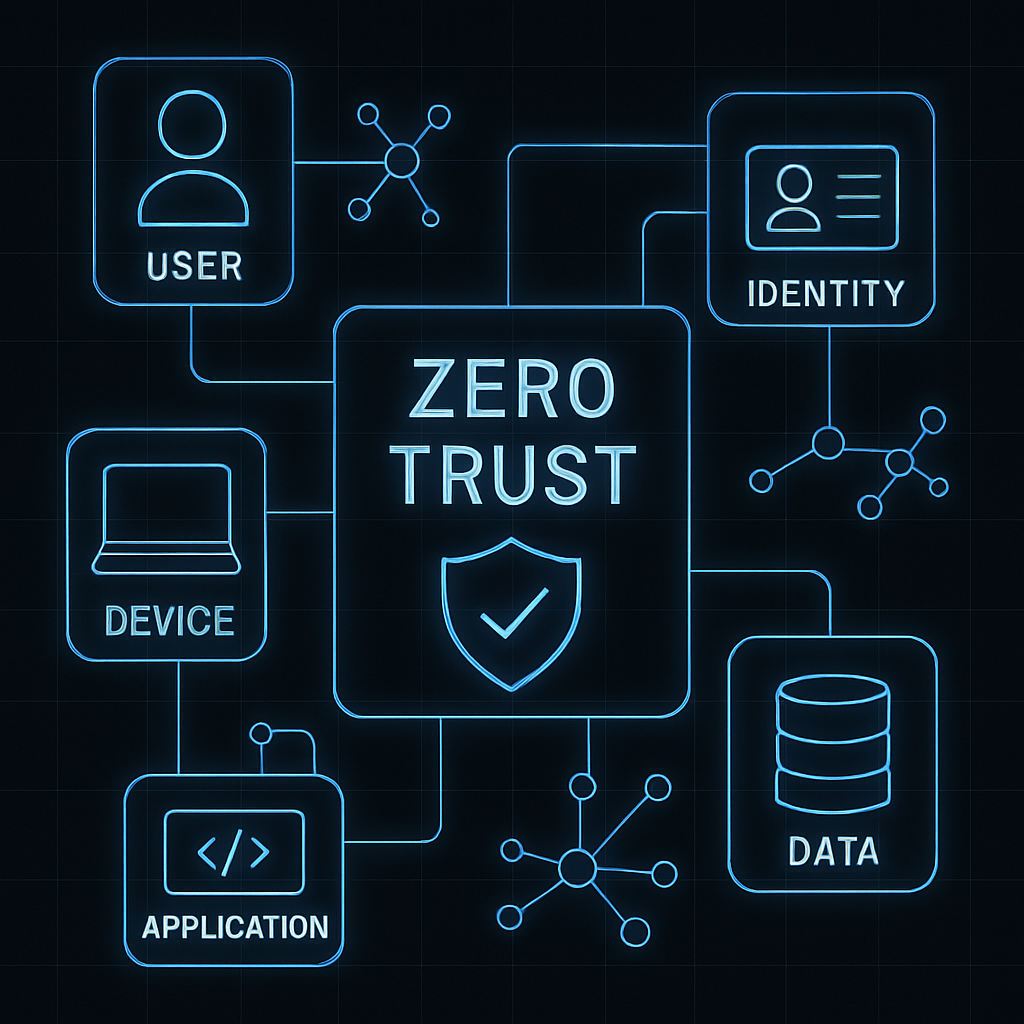
Zero-Trust Architecture is a security model that assumes no implicit trust within the network. Every request, whether internal or external, must be authenticated and authorized.
Example: Implementing Zero-Trust
In a Zero-Trust model, microservices authenticate each other using mutual TLS (mTLS). This ensures that only verified services can communicate, reducing the risk of lateral movement by attackers.
Real-World Use Cases and Architecture Patterns
Use Case: Securing a Multi-Cloud Environment
Organizations often adopt a multi-cloud strategy to leverage the strengths of different providers. Implementing IAM, VPCs, and Zero-Trust across multiple clouds requires a unified security policy and centralized identity management.
Architecture Pattern: Service Mesh for Zero-Trust
A service mesh, such as Istio, can facilitate Zero-Trust by managing service-to-service communication. It provides features like traffic management, security, and observability, making it easier to implement mTLS and enforce security policies.
Pros, Cons, and Challenges
Pros
- IAM: Granular access control, improved compliance.
- VPCs: Enhanced network isolation, customizable network configurations.
- Zero-Trust: Reduced attack surface, improved security posture.
Cons
- IAM: Complexity in managing policies, potential for misconfiguration.
- VPCs: Network complexity, potential performance overhead.
- Zero-Trust: Requires cultural shift, increased operational overhead.
Challenges
- Balancing security with usability.
- Ensuring consistent security policies across hybrid and multi-cloud environments.
- Managing the complexity of Zero-Trust implementations.
Best Practices / Recommendations
- Regularly audit IAM policies and roles to minimize excessive permissions.
- Use VPC peering and transit gateways to simplify network architecture.
- Implement a phased approach to Zero-Trust, starting with critical services.
Common Mistakes Engineers Make
- Over-permissioning IAM roles, leading to security vulnerabilities.
- Misconfiguring VPC security groups, resulting in unintended exposure.
- Underestimating the complexity of Zero-Trust, leading to incomplete implementations.
When NOT to Use This Approach
- Small-scale applications with limited security requirements may not need the complexity of Zero-Trust.
- Simple applications with minimal network interactions may not benefit from VPCs.
How This Impacts System Design Interviews
Understanding cloud security concepts like IAM, VPCs, and Zero-Trust can set you apart in system design interviews. Demonstrating knowledge of these architectures shows your ability to design secure, scalable systems.
Future Outlook
As cloud environments continue to evolve, security architectures will become more sophisticated. The integration of AI and machine learning for threat detection and response will further enhance cloud security.
Conclusion
Cloud security is a dynamic field that requires continuous learning and adaptation. By mastering IAM, VPCs, and Zero-Trust Architecture, engineers can design robust, secure systems that meet the demands of modern cloud environments. As we look to the future, staying informed and proactive will be key to navigating the challenges of cloud security.
By understanding and implementing these security measures, engineers can ensure that their cloud environments are not only secure but also resilient against the ever-evolving landscape of cyber threats.