MongoDB vs PostgreSQL: Making the Right Database Choice for Your Application
The Database Dilemma: Performance vs. Flexibility
You're staring at a performance dashboard, and the latency numbers are climbing. Your application is struggling to handle the load, and you're wondering if your choice of database is to blame. This is a common scenario for engineers who need to decide between MongoDB and PostgreSQL. The choice can significantly impact your application's performance, scalability, and even your team's productivity.
Context and Assumptions
This post assumes you're working with a modern tech stack: Java 21, Spring Boot 3.3, MongoDB 6.0, PostgreSQL 16, handling around 5k req/s, and operating in a multi-region cloud environment. We won't cover legacy systems or non-cloud deployments. If your stack differs significantly, the insights here might not fully apply.
Why this matters now (2025-2026 context)
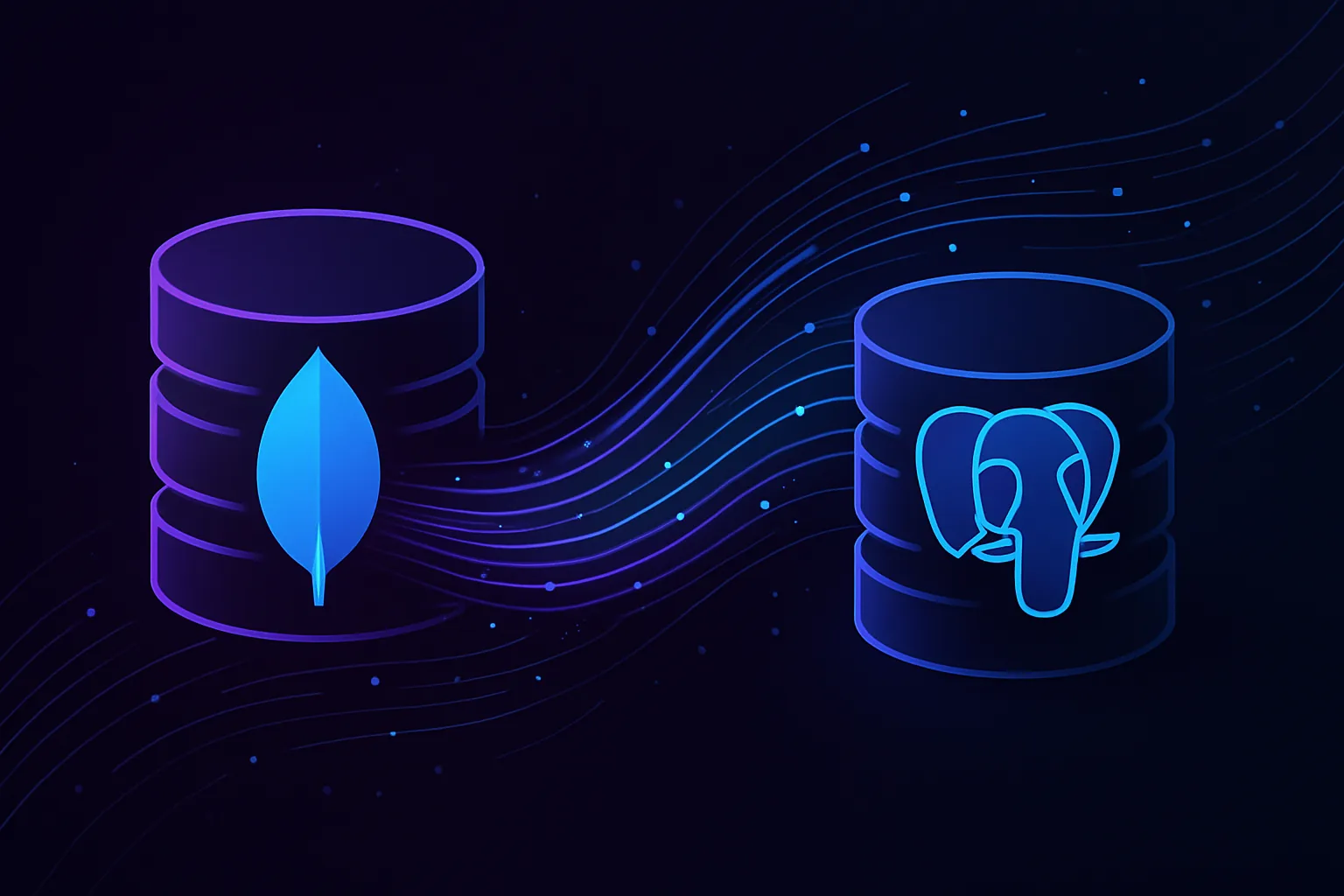
In 2025, the tech landscape is more dynamic than ever. With the rise of AI-driven applications and microservices architectures, the choice of database is more critical. MongoDB's flexible schema is appealing for rapidly evolving applications, while PostgreSQL's robust ACID compliance is crucial for data integrity. As cloud providers offer more managed services, understanding the trade-offs between these databases can save costs and improve performance.
Step-by-step walkthrough of the approach
-
Identify Your Data Model Needs: Determine if your application benefits from a flexible schema (MongoDB) or requires strict relational integrity (PostgreSQL). This decision impacts how you design your data layer.
-
Evaluate Query Patterns: Analyze your application's query patterns. MongoDB excels in handling unstructured data and complex queries with its aggregation framework. PostgreSQL, with its advanced indexing and query optimization, is ideal for complex joins and transactions.
-
Consider Scalability Requirements: If your application demands horizontal scaling, MongoDB's sharding capabilities might be advantageous. PostgreSQL can scale vertically and horizontally but requires more planning and management.
-
Assess Consistency Needs: For applications where data consistency is paramount, PostgreSQL's ACID transactions provide a reliable choice. MongoDB offers eventual consistency, which might suffice for less critical data.
-
Prototype and Benchmark: Implement a prototype using both databases and benchmark them under realistic loads. This will provide concrete data to guide your decision.
Real-world use cases or architecture patterns
Many companies leverage MongoDB for its flexibility in handling diverse data types, such as IoT data or user-generated content. For instance, a social media platform might use MongoDB to store user profiles and posts due to their varying structures.
Conversely, financial institutions often choose PostgreSQL for its transactional integrity and complex query capabilities. A banking application might rely on PostgreSQL to manage account transactions and ensure data consistency across distributed systems.
Common Mistakes Engineers Make
- Ignoring Data Model Complexity: Choosing MongoDB for a highly relational data model can lead to complex and inefficient queries.
- Overlooking Indexing Strategies: Failing to optimize indexes in PostgreSQL can result in slow query performance.
- Misjudging Scalability Needs: Assuming MongoDB's sharding will automatically solve all scaling issues without proper design can lead to bottlenecks.
Trade-offs and When NOT to Use This Approach
- MongoDB: Avoid if your application requires complex transactions and strict data integrity. The lack of ACID compliance can lead to data anomalies.
- PostgreSQL: Not ideal for applications needing rapid schema evolution or handling large volumes of unstructured data. The rigidity of its schema can slow down development.
How This Impacts System Design Interviews
Understanding the trade-offs between MongoDB and PostgreSQL can be a differentiator in system design interviews. Demonstrating knowledge of when to use each database, based on application requirements, showcases your ability to make informed architectural decisions.
Practical Recap
- Evaluate your data model: Choose MongoDB for flexibility, PostgreSQL for relational integrity.
- Analyze query patterns: Match your database choice to your application's query needs.
- Plan for scalability: Consider MongoDB for horizontal scaling, PostgreSQL for robust transactions.
- Prototype and benchmark: Test both databases under realistic conditions to guide your decision.
- Stay informed: Keep up with database advancements to leverage new features and improvements.