Mastering SLOs, SLIs, and Error Budgets: SRE in Practice
The Challenge of Unpredictable Downtime
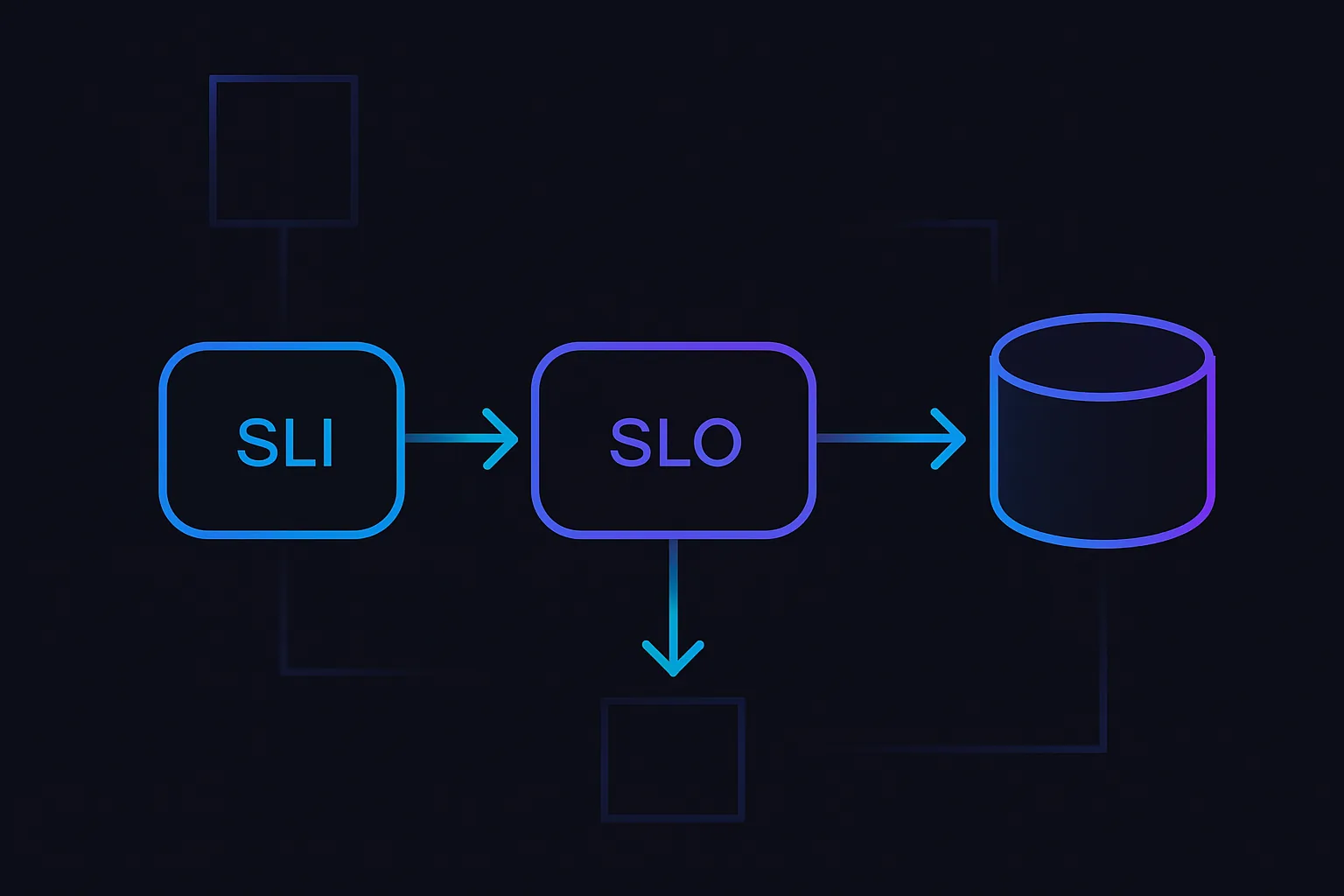
Imagine you're in the middle of a critical deployment, and suddenly, your service latency spikes, causing a cascade of failures across your microservices architecture. This isn't just a hypothetical scenario; it's a reality many engineers face. The key to mitigating such issues lies in effectively managing Service Level Objectives (SLOs), Service Level Indicators (SLIs), and error budgets.
Context and Assumptions
This post assumes you're working with a modern tech stack: Java 21, Spring Boot 3.3, Kubernetes, and AWS, handling around 5k req/s across multiple regions. We'll focus on SRE practices applicable to this environment, excluding legacy systems or monolithic architectures.
Why This Matters Now (2025-2026 Context)
As we move further into 2025, the complexity of distributed systems continues to grow. With the rise of AI-driven applications and increased user expectations, maintaining service reliability is more critical than ever. SLOs, SLIs, and error budgets are not just buzzwords; they are essential tools for ensuring your systems meet these demands.
Implementing SLOs, SLIs, and Error Budgets
- Define Your SLIs: Start by identifying the key metrics that reflect your service's performance. These could be latency, error rate, or throughput. Ensure these metrics are measurable and directly impact user experience.
yaml
   # Example SLI configuration in Prometheus
   - name: request_latency
     query: histogram_quantile(0.95, sum(rate(http_request_duration_seconds_bucket[5m])) by (le))
     description: "95th percentile of request latency"
-
Set Your SLOs: Based on your SLIs, establish realistic SLOs. These are the targets you aim to achieve, such as "95% of requests should have a latency below 200ms."
-
Calculate Error Budgets: Your error budget is the permissible amount of unreliability. If your SLO is 95%, your error budget is 5%. This budget allows for innovation and risk-taking without compromising reliability.
-
Monitor and Alert: Use tools like Prometheus and Grafana to continuously monitor your SLIs and alert when your error budget is at risk.
-
Iterate and Improve: Regularly review your SLOs and error budgets. Adjust them based on historical data and changing business needs.
Real-world Use Cases or Architecture Patterns
Many companies, like Netflix and Google, have successfully implemented SLOs and error budgets. They use these metrics to drive reliability improvements and prioritize engineering efforts. For instance, Netflix's chaos engineering practices are built around understanding and respecting error budgets.
Common Mistakes Engineers Make
- Overly Ambitious SLOs: Setting unrealistic SLOs can lead to constant breaches and demotivation.
- Ignoring Error Budgets: Failing to respect error budgets can result in technical debt and reduced reliability.
- Lack of Iteration: Not revisiting and adjusting SLOs and SLIs can make them obsolete as the system evolves.
Trade-offs and When NOT to Use This Approach
While SLOs and error budgets are powerful, they come with trade-offs. Implementing them requires time and resources, which might not be feasible for small teams or startups. Additionally, in highly volatile environments, maintaining accurate SLIs can be challenging.
How This Impacts System Design Interviews
Understanding SLOs, SLIs, and error budgets can set you apart in system design interviews. It demonstrates your ability to design systems with reliability in mind, a crucial skill for senior engineering roles.
Practical Recap
- Identify Key SLIs: Focus on metrics that impact user experience.
- Set Realistic SLOs: Ensure they are achievable and aligned with business goals.
- Respect Error Budgets: Use them to balance reliability and innovation.
- Monitor Continuously: Implement robust monitoring and alerting systems.
- Iterate Regularly: Adjust your objectives based on data and feedback.