
FastAPI Error Handling: Exception Handlers That Produce Useful APIs
In the world of APIs, a poorly handled exception can lead to confusing error messages, frustrated users, and increased support costs. Imagine a user-facing API that returns a generic "Internal Server Error" without any context. This not only frustrates the user but also makes debugging a nightmare for developers. FastAPI, a modern web framework for Python, offers a robust way to handle exceptions and produce useful APIs.
Context and Assumptions
This post assumes you are working with Python 3.9+, FastAPI 0.95+, and a typical microservices architecture. The focus is on backend services handling around 1k req/s, deployed in a cloud environment. We won't cover frontend error handling or client-side retries.
Why This Matters Now (2025-2026 Context)
As APIs become the backbone of modern applications, the demand for reliable and user-friendly error handling has never been higher. With the rise of AI-driven applications and microservices, the complexity of systems has increased, making robust error handling crucial. FastAPI's ability to handle exceptions elegantly is a game-changer in this landscape, allowing developers to create APIs that are both informative and resilient.
Step-by-step Walkthrough of the Approach

- Define Custom Exceptions
Start by defining custom exceptions that represent specific error conditions in your application. This helps in categorizing errors and providing more context.
python
   class ItemNotFoundException(Exception):
       def __init__(self, item_id: int):
           self.item_id = item_id
- Create Exception Handlers
Use FastAPI's@app.exception_handlerdecorator to create handlers for your custom exceptions. This allows you to return meaningful error responses.
```python
from fastapi import Request, HTTPException
from fastapi.responses import JSONResponse
@app.exception_handler(ItemNotFoundException)
async def item_not_found_handler(request: Request, exc: ItemNotFoundException):
return JSONResponse(
status_code=404,
content={"message": f"Item with ID {exc.item_id} not found."} # Custom error message
)
```
- Integrate with Business Logic
Raise your custom exceptions within your business logic where appropriate. This ensures that errors are caught and handled consistently.
python
   @app.get("/items/{item_id}")
   async def read_item(item_id: int):
       item = get_item_from_db(item_id)
       if not item:
           raise ItemNotFoundException(item_id)  # Raise custom exception
       return item
- Test Your Handlers
Ensure your exception handlers work as expected by writing unit tests. This helps in maintaining the reliability of your API.
python
   def test_item_not_found(client):
       response = client.get("/items/999")
       assert response.status_code == 404
       assert response.json() == {"message": "Item with ID 999 not found."}
Real-world Use Cases or Architecture Patterns
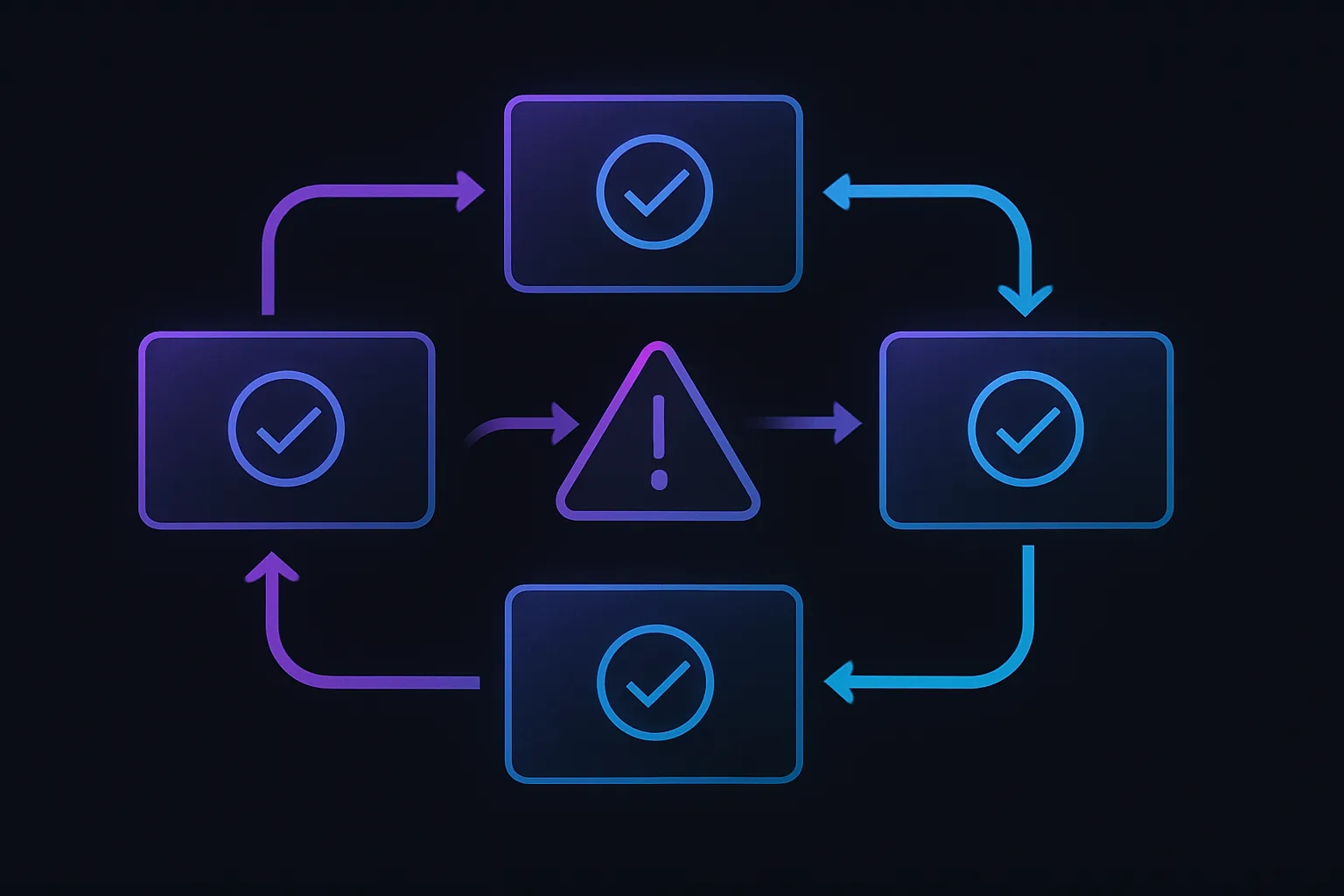
In a microservices architecture, each service might have its own set of exceptions and handlers. For instance, a payment service might handle exceptions related to payment processing, while an inventory service handles stock-related errors. FastAPI's exception handling can be integrated with logging and monitoring tools to provide insights into error trends and system health.
Common Mistakes Engineers Make
- Ignoring Specificity: Using generic exceptions like
HTTPExceptionwithout providing specific error messages can lead to confusion. - Lack of Testing: Failing to test exception handlers can result in unhandled errors in production.
- Overusing Exceptions: Raising exceptions for control flow instead of using them for actual error conditions can degrade performance.
Trade-offs and When NOT to Use This Approach
While FastAPI's exception handling is powerful, it may not be suitable for all scenarios. For instance, in high-performance systems where latency is critical, the overhead of exception handling might be a concern. Additionally, if your application requires complex error recovery mechanisms, you might need a more sophisticated approach.
How This Impacts System Design Interviews
Understanding how to implement effective error handling in FastAPI can be a valuable skill in system design interviews. It demonstrates your ability to design resilient systems and handle edge cases gracefully. Be prepared to discuss trade-offs and justify your design choices.
Practical Recap
- Define Custom Exceptions: Create exceptions that represent specific error conditions.
- Implement Exception Handlers: Use FastAPI's decorators to handle exceptions and return meaningful responses.
- Integrate with Business Logic: Raise exceptions where appropriate to ensure consistent error handling.
- Test Thoroughly: Write unit tests to verify that your handlers work as expected.
- Consider Trade-offs: Evaluate the performance impact and suitability for your specific use case.