
Divide and Conquer: Not Just an Algorithm, a Thinking Strategy
In the ever-evolving landscape of software engineering, the divide and conquer strategy has long been revered as a cornerstone of algorithm design. But what if I told you that this approach extends far beyond algorithms, serving as a powerful thinking strategy for tackling complex problems in system design, microservices, and DevOps? In this blog post, we'll explore how divide and conquer can be applied to modern software development challenges, offering insights and best practices for engineers looking to build scalable and efficient systems.
Why This Topic Matters NOW
As we move into 2025 and beyond, the complexity of software systems continues to grow. With the rise of microservices, cloud-native architectures, and AI-driven applications, engineers are tasked with designing systems that are not only scalable but also resilient and maintainable. The divide and conquer strategy offers a structured approach to breaking down these complex problems into manageable parts, making it more relevant than ever in today's fast-paced tech environment.
Deep Dive into Concepts
At its core, divide and conquer is about breaking a problem into smaller, more manageable sub-problems, solving each independently, and then combining the results. This approach is not only applicable to algorithms like merge sort or quick sort but also to system design and architecture.
Example: Microservices Architecture
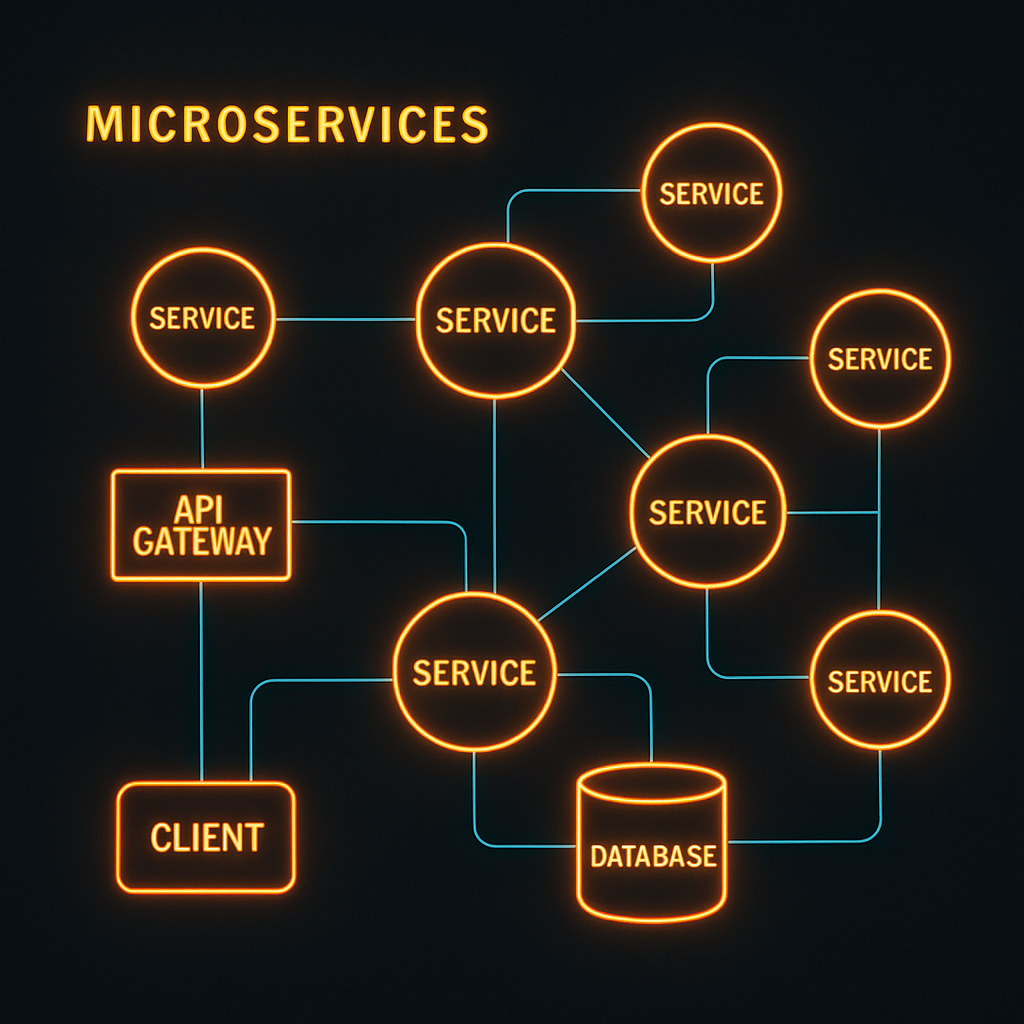
Consider a monolithic application that handles user authentication, payment processing, and data analytics. By applying divide and conquer, we can decompose this monolith into distinct microservices, each responsible for a specific domain. This not only simplifies development and deployment but also enhances scalability and fault isolation.
Real-World Use Cases
Use Case 1: Scaling with Microservices
In a real-world scenario, a company might start with a monolithic application that becomes difficult to scale as user demand grows. By adopting a microservices architecture, they can independently scale services based on demand, optimizing resource usage and improving performance.
Use Case 2: DevOps and CI/CD Pipelines
Divide and conquer can also be applied to DevOps practices. By breaking down the CI/CD pipeline into smaller stages, teams can independently optimize each stage, leading to faster and more reliable deployments.
Pros, Cons, and Challenges
Pros
- Scalability: Independent components can be scaled as needed.
- Maintainability: Smaller codebases are easier to manage and update.
- Fault Isolation: Failures in one component do not affect others.
Cons
- Complexity: Managing multiple services can introduce operational overhead.
- Latency: Inter-service communication can add latency.
- Data Consistency: Ensuring consistency across services can be challenging.
Challenges
- Service Coordination: Requires robust orchestration and communication mechanisms.
- Monitoring and Logging: Needs comprehensive monitoring to track service health.
Best Practices / Recommendations
- Start Small: Begin with a few critical services and gradually decompose the monolith.
- Automate Everything: Use automation tools for deployment, scaling, and monitoring.
- Invest in Observability: Implement comprehensive logging and monitoring from the start.
- Design for Failure: Build resilience into each service to handle failures gracefully.
Future Outlook
As AI and machine learning continue to integrate into software systems, the divide and conquer strategy will play a crucial role in managing the complexity of these intelligent applications. By breaking down AI models into smaller, specialized components, engineers can optimize performance and scalability.
Common Mistakes Engineers Make
- Over-Engineering: Decomposing too early or too much can lead to unnecessary complexity.
- Ignoring Communication Overhead: Failing to account for the latency and reliability of inter-service communication.
- Neglecting Data Management: Overlooking the challenges of data consistency and synchronization across services.
When NOT to Use This Approach
- Simple Applications: For small, straightforward applications, the overhead of microservices may not be justified.
- Tightly Coupled Components: If components are highly interdependent, the benefits of separation may be limited.
How This Impacts System Design Interviews
Understanding and applying divide and conquer in system design interviews can set candidates apart. It demonstrates the ability to think critically about problem decomposition and scalability, which are key skills for designing robust systems.
Conclusion
The divide and conquer strategy is more than just an algorithmic technique; it's a powerful mindset for tackling complex software engineering challenges. By applying this approach to system design, microservices, and DevOps, engineers can build scalable, resilient, and maintainable systems. As we look to the future, embracing divide and conquer will be essential for navigating the complexities of modern software development.
Key Takeaways:
- Divide and conquer is a versatile strategy for problem-solving in software engineering.
- It enhances scalability, maintainability, and fault isolation in complex systems.
- Engineers should be mindful of the trade-offs and challenges associated with this approach.