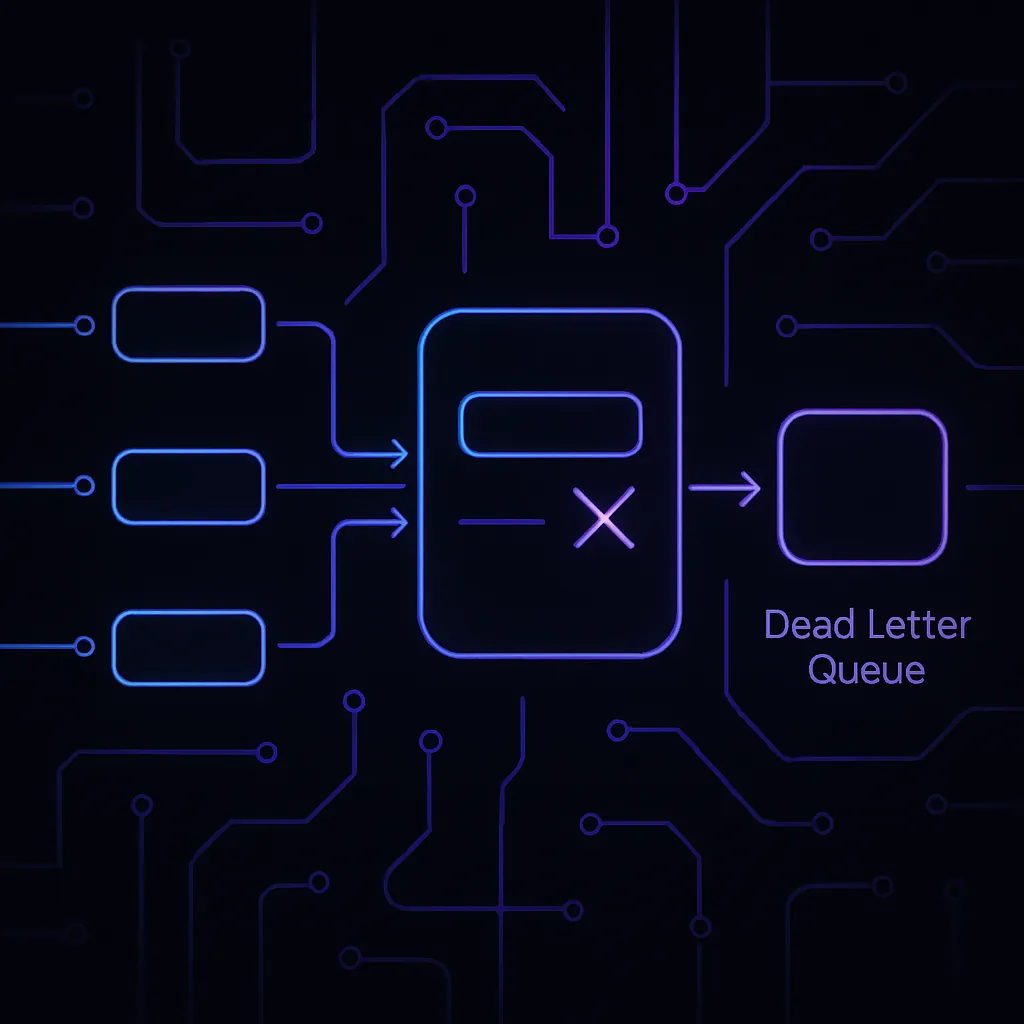
Dead Letter Queues: Handling Poison Messages in Production
In the world of microservices, where distributed systems are the norm, message-driven architectures have become a cornerstone for building scalable and resilient applications. However, with the benefits of asynchronous communication come challenges, one of which is handling "poison messages." These are messages that cannot be processed successfully and can cause disruptions if not managed properly. Enter Dead Letter Queues (DLQs), a crucial component for maintaining system health and reliability.
Why This Topic Matters Now
As we move into 2025 and beyond, the complexity of systems continues to grow. With the proliferation of IoT devices, AI-driven applications, and real-time data processing, the volume and velocity of messages in our systems are increasing exponentially. This makes the need for robust error handling mechanisms like DLQs more critical than ever. Ignoring poison messages can lead to cascading failures, increased latency, and degraded user experiences.
Understanding Dead Letter Queues
A Dead Letter Queue is a secondary queue where messages that cannot be processed successfully are sent. This allows the main processing queue to continue functioning without being blocked by problematic messages. DLQs are not a new concept, but their implementation and importance have evolved with modern architectures.
Example: Implementing DLQs in Spring Boot with Kafka
Consider a microservices architecture where services communicate via Kafka. Here's a simplified example of how you might configure a DLQ in a Spring Boot application:
@Configuration
public class KafkaConfig {

    @Bean
    public ConcurrentKafkaListenerContainerFactory<String, String> kafkaListenerContainerFactory() {
        ConcurrentKafkaListenerContainerFactory<String, String> factory =
                new ConcurrentKafkaListenerContainerFactory<>();
        factory.setConsumerFactory(consumerFactory());
        factory.setErrorHandler(new SeekToCurrentErrorHandler(deadLetterPublishingRecoverer(), 3));
        return factory;
    }

    @Bean
    public DeadLetterPublishingRecoverer deadLetterPublishingRecoverer() {
        return new DeadLetterPublishingRecoverer(kafkaTemplate());
    }

    @Bean
    public KafkaTemplate<String, String> kafkaTemplate() {
        return new KafkaTemplate<>(producerFactory());
    }
}
In this configuration, messages that fail to process after three attempts are sent to a DLQ, allowing the main consumer to continue processing other messages.
Real-World Use Cases and Architecture Patterns
DLQs are widely used in various industries. For instance, in e-commerce platforms, DLQs can handle order processing failures due to data validation errors or third-party service outages. In financial services, they ensure that transaction messages are not lost due to temporary processing issues.
System Design Example
In this architecture, the consumer service processes messages from the main queue. If processing fails, the message is retried a set number of times before being sent to the DLQ. Operations teams can monitor the DLQ and take corrective actions.
Pros, Cons, and Challenges
Pros
- Isolation of Failures: DLQs prevent poison messages from blocking the main processing flow.
- Improved Reliability: Systems remain operational even when encountering problematic messages.
- Enhanced Monitoring: DLQs provide insights into recurring issues and help in root cause analysis.
Cons
- Increased Complexity: Implementing DLQs adds complexity to the system architecture.
- Resource Overhead: Additional storage and processing resources are required to manage DLQs.
Challenges
- Message Reprocessing: Deciding when and how to reprocess messages from the DLQ can be challenging.
- Alert Fatigue: Without proper filtering, DLQs can generate excessive alerts, leading to alert fatigue.
Best Practices and Recommendations
- Set Clear Retention Policies: Define how long messages should remain in the DLQ before being purged.
- Automate Monitoring and Alerts: Use automated tools to monitor DLQs and alert only on actionable items.
- Implement Idempotency: Ensure that message processing is idempotent to safely retry messages.
- Regularly Review DLQ Contents: Periodically analyze DLQ messages to identify and fix underlying issues.
Common Mistakes Engineers Make
- Ignoring DLQs: Some engineers overlook the importance of DLQs, leading to unhandled failures.
- Over-Reliance on DLQs: Using DLQs as a crutch instead of addressing root causes of failures.
- Poor Alerting Strategies: Setting up alerts without proper filtering, leading to noise.
When NOT to Use This Approach
DLQs may not be suitable for systems where real-time processing is critical and delays cannot be tolerated. In such cases, alternative strategies like synchronous error handling or immediate retries might be more appropriate.
How This Impacts System Design Interviews
Understanding DLQs and their role in system design can be a differentiator in interviews. It demonstrates an awareness of real-world challenges and the ability to design resilient systems. Interviewers often look for candidates who can balance complexity with reliability.
Future Outlook
As systems continue to evolve, the role of DLQs will expand. We can expect more sophisticated tools and frameworks to emerge, offering better integration and automation capabilities. AI-driven analytics might also play a role in predicting and preventing poison messages.
Conclusion
Dead Letter Queues are an essential tool in the microservices toolkit, providing a safety net for handling poison messages. By implementing DLQs effectively, engineers can build more resilient and reliable systems. As we look to the future, the importance of robust error handling mechanisms will only grow, making DLQs a critical component of modern software architecture.
By understanding and implementing DLQs, you can ensure that your systems remain robust and resilient, even in the face of unexpected challenges.