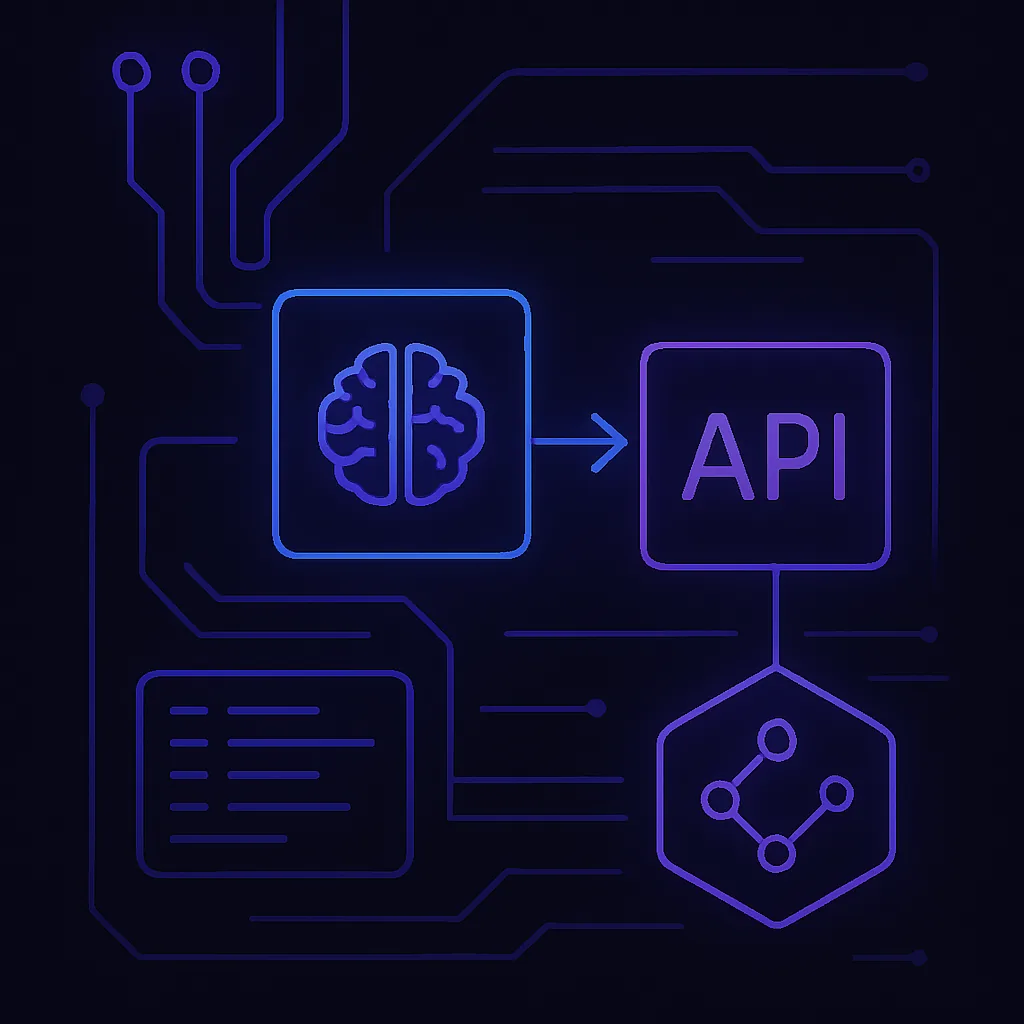
Building AI-Powered APIs: Design Patterns and Best Practices
The rise of AI has transformed the landscape of software development, pushing engineers to integrate intelligent capabilities into their applications. As we step into 2025, AI-powered APIs are not just a trend but a necessity for businesses aiming to stay competitive. This blog post delves into the design patterns and best practices for building AI-powered APIs, offering insights from real-world implementations.

Why AI-Powered APIs Matter Now
In today's fast-paced digital world, AI-powered APIs enable applications to deliver personalized experiences, automate complex tasks, and derive insights from vast datasets. With advancements in AI models and cloud computing, integrating AI into APIs has become more accessible and cost-effective. As businesses increasingly rely on data-driven decisions, the demand for AI-powered APIs is set to grow exponentially.
Deep Dive into Concepts
Design Patterns for AI-Powered APIs
-
Microservices Architecture: AI models can be encapsulated as microservices, allowing for independent scaling and deployment. This pattern enhances modularity and facilitates continuous integration and delivery.
-
Event-Driven Architecture: Leveraging event streams (e.g., Kafka) can decouple AI processing from client requests, enabling asynchronous processing and real-time analytics.
-
Serverless Functions: For lightweight AI tasks, serverless functions (e.g., AWS Lambda) can be used to execute AI models on-demand, reducing infrastructure costs.
Real-World Use Cases
- Recommendation Systems: E-commerce platforms use AI-powered APIs to deliver personalized product recommendations, enhancing user engagement and sales.
- Fraud Detection: Financial institutions deploy AI models via APIs to detect fraudulent transactions in real-time, safeguarding customer assets.

Pros, Cons, and Challenges
Pros
- Scalability: Microservices and cloud-native architectures allow AI models to scale independently based on demand.
- Flexibility: APIs provide a standardized interface for integrating AI capabilities across diverse applications.
Cons
- Complexity: Designing and maintaining AI-powered APIs can be complex, requiring expertise in both AI and software engineering.
- Latency: Real-time AI inference can introduce latency, impacting user experience.
Challenges
- Model Drift: AI models may become less accurate over time, necessitating continuous monitoring and retraining.
- Data Privacy: Handling sensitive data requires robust security measures to comply with regulations like GDPR.
Best Practices / Recommendations
- Versioning: Implement API versioning to manage changes and ensure backward compatibility.
- Monitoring and Logging: Use tools like Prometheus and Grafana to monitor API performance and log AI model outputs for auditing.
- Security: Employ OAuth2 for authentication and encrypt data in transit and at rest to protect user privacy.
Common Mistakes Engineers Make
- Ignoring Model Retraining: Failing to retrain AI models can lead to degraded performance over time.
- Overcomplicating Architecture: Over-engineering the API architecture can lead to increased maintenance overhead.
When NOT to Use This Approach
- Simple Applications: For applications with minimal AI requirements, integrating complex AI-powered APIs may be overkill.
- Resource Constraints: Organizations with limited resources may struggle to maintain the infrastructure required for AI-powered APIs.
How This Impacts System Design Interviews
Understanding AI-powered API design can set candidates apart in system design interviews. Interviewers often look for candidates who can balance AI capabilities with system scalability and maintainability.
Future Outlook
As AI models become more sophisticated, the integration of AI into APIs will evolve, with trends like federated learning and edge AI gaining traction. These advancements will further enhance the capabilities and reach of AI-powered APIs.
Conclusion
Building AI-powered APIs requires a careful balance of design patterns, best practices, and real-world insights. By leveraging microservices, event-driven architectures, and serverless functions, engineers can create scalable and efficient AI integrations. As we move forward, staying abreast of emerging trends and technologies will be key to harnessing the full potential of AI in APIs.
In this blog post, we've explored the intricacies of building AI-powered APIs, offering practical advice and insights for engineers navigating this dynamic field. Whether you're designing a new system or enhancing an existing one, these patterns and practices will guide you in creating robust, scalable, and intelligent APIs.