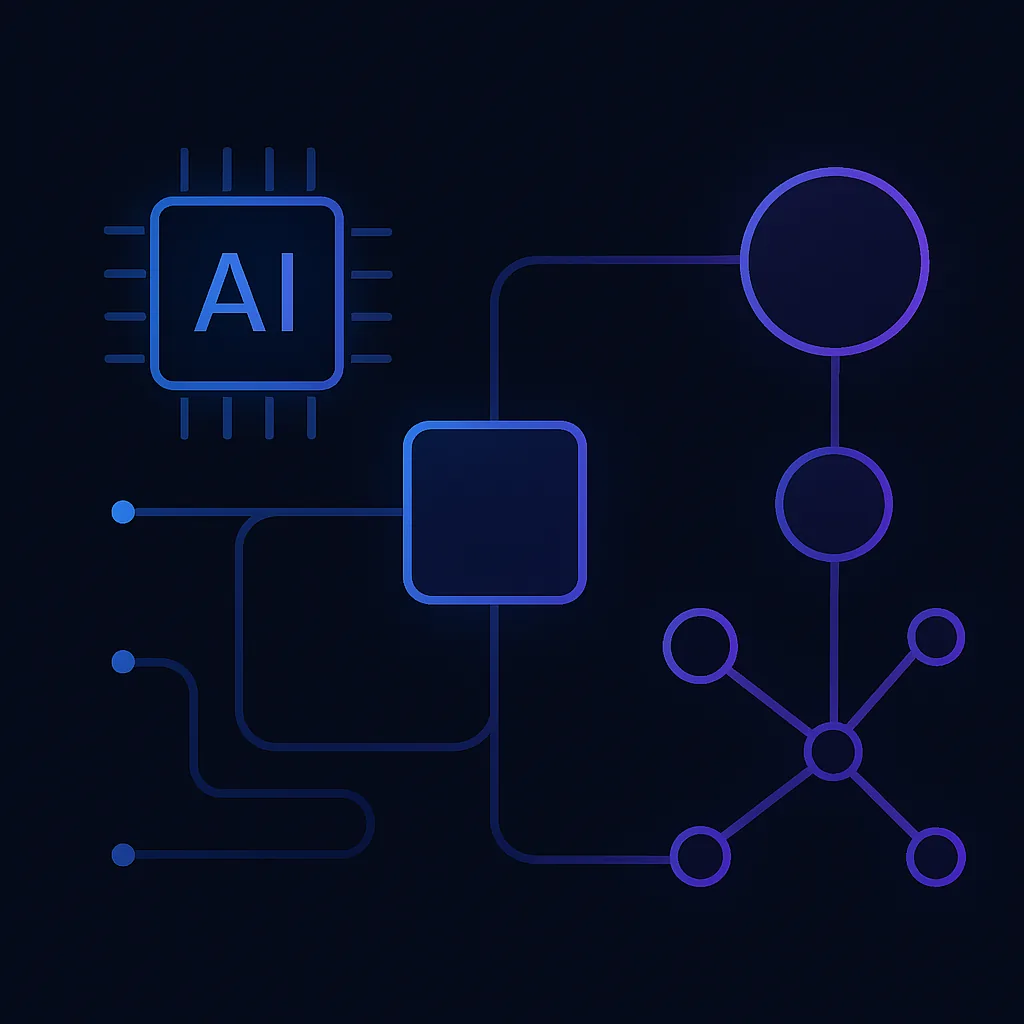
Building AI Agents with LangChain and LangGraph
In the rapidly evolving landscape of AI, the ability to build intelligent agents that can understand and interact with human language is more crucial than ever. As we step into 2025, the demand for sophisticated AI agents has skyrocketed, driven by advancements in natural language processing (NLP) and the need for more intuitive user interfaces. Enter LangChain and LangGraph, two powerful tools that are transforming how we build AI agents.

Why This Topic Matters NOW
The year 2025 marks a pivotal moment in AI development. With the proliferation of AI-driven applications across industries, from healthcare to finance, the need for robust, scalable, and efficient AI agents is at an all-time high. LangChain and LangGraph offer a modern approach to building these agents, leveraging the latest in NLP and graph-based data structures to create more intelligent and context-aware systems.
Deep Dive into Concepts
LangChain: The Backbone of Language Processing
LangChain is a framework designed to simplify the integration of language models into applications. It provides a set of tools and abstractions that make it easier to build, train, and deploy language models. At its core, LangChain focuses on modularity and scalability, allowing developers to plug in different language models and components as needed.
// Example of integrating a language model using LangChain
LangChain langChain = new LangChain.Builder()
    .withModel("gpt-4")
    .withTokenizer("custom-tokenizer")
    .build();

String response = langChain.process("What is the weather like today?");
System.out.println(response);
LangGraph: Structuring Knowledge with Graphs
LangGraph complements LangChain by providing a graph-based approach to managing and querying knowledge. It allows AI agents to understand and navigate complex relationships between entities, making them more context-aware and capable of handling intricate queries.
// Example of creating a knowledge graph with LangGraph
LangGraph langGraph = new LangGraph();
langGraph.addEntity("Weather", "Sunny");
langGraph.addRelation("Weather", "Location", "San Francisco");

String weatherInSF = langGraph.query("What is the weather in San Francisco?");
System.out.println(weatherInSF);
Real-World Use Cases and Architecture Patterns
Use Case: Customer Support Chatbots
One of the most common applications of AI agents is in customer support. By integrating LangChain and LangGraph, companies can build chatbots that not only understand customer queries but also provide contextually relevant responses.
Architecture Pattern: Microservices with AI Agents
In a microservices architecture, AI agents can be deployed as independent services that interact with other components through APIs. This approach allows for scalability and flexibility, enabling teams to update or replace AI models without affecting the entire system.
Pros, Cons, and Challenges
Pros
- Scalability: Both LangChain and LangGraph are designed to handle large volumes of data and requests.
- Modularity: Easily integrate different models and components.
- Context Awareness: Enhanced understanding of complex queries through graph-based knowledge.
Cons
- Complexity: Requires a deep understanding of both NLP and graph theory.
- Resource Intensive: High computational and memory requirements.
Challenges
- Data Privacy: Ensuring user data is protected while processing language queries.
- Model Bias: Addressing biases in language models to ensure fair and accurate responses.
Best Practices / Recommendations
- Start Small: Begin with a simple use case and gradually expand the capabilities of your AI agent.
- Monitor Performance: Continuously track the performance of language models and optimize as needed.
- Ensure Security: Implement robust security measures to protect sensitive data.
Future Outlook
As AI technology continues to advance, we can expect LangChain and LangGraph to evolve, offering even more sophisticated tools for building AI agents. The integration of AI with other emerging technologies, such as quantum computing and edge computing, will further enhance the capabilities of these agents.
Conclusion with Key Takeaways
LangChain and LangGraph represent a significant leap forward in the development of AI agents. By leveraging these tools, developers can build more intelligent, context-aware systems that meet the demands of today's AI-driven world. As we look to the future, the potential for these technologies to transform industries is immense.
Common Mistakes Engineers Make
- Overcomplicating the Architecture: Avoid adding unnecessary complexity to your system design.
- Neglecting Data Quality: Ensure that the data used to train language models is clean and representative.
When NOT to Use This Approach
- Simple Applications: For straightforward tasks, traditional rule-based systems may suffice.
- Limited Resources: If computational resources are constrained, consider lighter alternatives.
How This Impacts System Design Interviews
Understanding LangChain and LangGraph can set you apart in system design interviews, showcasing your ability to integrate modern AI technologies into scalable architectures. Be prepared to discuss trade-offs and justify your design choices.
By embracing these cutting-edge tools, engineers can stay ahead in the competitive field of AI development, building systems that are not only intelligent but also adaptable to the ever-changing technological landscape.