
AWS Lambda Function URLs vs API Gateway: When to Use Each
In the ever-evolving landscape of cloud computing, AWS Lambda and API Gateway have become staples for building scalable, serverless applications. However, with the introduction of AWS Lambda Function URLs, engineers now face a critical decision: when to use Lambda Function URLs versus API Gateway? This choice can significantly impact your application's performance, cost, and complexity.

Why This Topic Matters NOW
As we move into 2025 and beyond, the demand for efficient, cost-effective cloud solutions continues to rise. Companies are increasingly adopting serverless architectures to reduce operational overhead and improve scalability. Understanding the nuances between Lambda Function URLs and API Gateway is crucial for engineers tasked with designing robust, future-proof systems.
Deep Dive into Concepts
AWS Lambda Function URLs
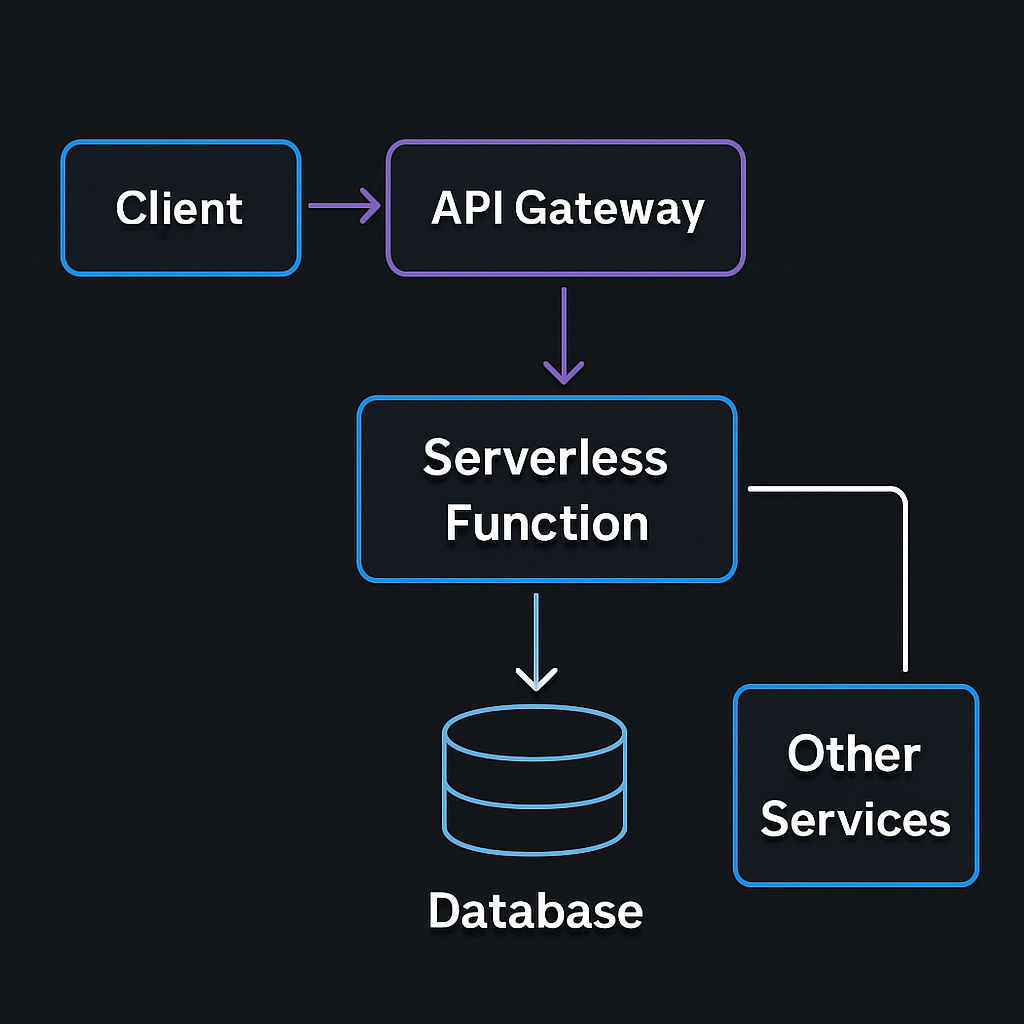
AWS Lambda Function URLs provide a simple way to invoke Lambda functions via HTTPS without the need for an API Gateway. This feature is particularly useful for lightweight applications or microservices that require minimal configuration and management.
Example:
// Java code to create a Lambda function with a URL
import com.amazonaws.services.lambda.AWSLambda;
import com.amazonaws.services.lambda.AWSLambdaClientBuilder;
import com.amazonaws.services.lambda.model.*;

public class LambdaFunctionURL {
    public static void main(String[] args) {
        AWSLambda lambdaClient = AWSLambdaClientBuilder.defaultClient();

        CreateFunctionRequest request = new CreateFunctionRequest()
            .withFunctionName("MyFunction")
            .withRuntime(Runtime.Java8)
            .withRole("arn:aws:iam::123456789012:role/execution_role")
            .withHandler("com.example.MyHandler::handleRequest")
            .withCode(new FunctionCode().withS3Bucket("my-bucket").withS3Key("my-function.zip"));

        CreateFunctionResult result = lambdaClient.createFunction(request);
        System.out.println("Function ARN: " + result.getFunctionArn());
    }
}
API Gateway
API Gateway acts as a front door for applications to access data, business logic, or functionality from your backend services. It provides features like request/response transformation, caching, and throttling, making it ideal for more complex API management needs.
Example:
# Example API Gateway configuration using AWS SAM
Resources:
  MyApi:
    Type: AWS::Serverless::Api
    Properties:
      StageName: Prod
      DefinitionBody:
        openapi: 3.0.1
        info:
          title: My API
          version: 1.0
        paths:
          /resource:
            get:
              x-amazon-apigateway-integration:
                uri: arn:aws:apigateway:region:lambda:path/2015-03-31/functions/arn:aws:lambda:region:account-id:function:MyFunction/invocations
                httpMethod: POST
                type: aws_proxy
Real-World Use Cases
Lambda Function URLs
- Simple Microservices: Ideal for microservices that require direct invocation without the overhead of API management.
- Internal Tools: Useful for internal applications where security and access control are managed separately.
- Prototyping: Quick setup for testing and prototyping new features.
API Gateway
- Public APIs: Best suited for public-facing APIs that require robust security, rate limiting, and monitoring.
- Complex Workflows: Suitable for applications with complex request/response transformations and integrations.
- Multi-Region Deployments: Facilitates global distribution and latency optimization.
Pros, Cons, and Challenges
Lambda Function URLs
Pros:
- Simplicity and ease of setup
- Lower cost for simple use cases
- Direct HTTPS access
Cons:
- Limited features compared to API Gateway
- Basic security and access control
API Gateway
Pros:
- Comprehensive API management features
- Advanced security and monitoring
- Supports complex integrations
Cons:
- Higher cost and complexity
- Requires more configuration and management
Best Practices / Recommendations
- Use Lambda Function URLs for simple, internal applications where minimal configuration is needed.
- Opt for API Gateway when building public APIs or when advanced features like caching and throttling are required.
- Combine Both: Use Lambda Function URLs for internal microservices and API Gateway for external-facing APIs to optimize cost and performance.
Future Outlook
As AWS continues to innovate, we can expect further enhancements to both Lambda Function URLs and API Gateway. The trend towards serverless architectures will likely drive more features that simplify integration and reduce costs.
Common Mistakes Engineers Make
- Overusing API Gateway: Using API Gateway for simple use cases where Lambda Function URLs would suffice, leading to unnecessary complexity and cost.
- Ignoring Security: Failing to implement proper security measures when using Lambda Function URLs, especially for public-facing applications.
When NOT to Use This Approach
- High Throughput Applications: For applications requiring extremely high throughput, consider alternatives like AWS Fargate or EC2.
- Complex State Management: If your application requires complex state management, serverless might not be the best fit.
How This Impacts System Design Interviews
Understanding the trade-offs between Lambda Function URLs and API Gateway can be a valuable asset in system design interviews. It demonstrates your ability to choose the right tools for the job and optimize for cost and performance.
Conclusion
AWS Lambda Function URLs and API Gateway each have their place in modern cloud architectures. By understanding their strengths and limitations, engineers can make informed decisions that align with their application's needs and business goals. As we look to the future, staying informed about AWS's evolving offerings will be key to maintaining a competitive edge in the cloud landscape.
By leveraging the right tool for the right job, you can build efficient, scalable, and cost-effective serverless applications that meet the demands of today's fast-paced digital world.